HomeStatesDishesAboutContact

EatByState

Discover India's Culinary Heritage

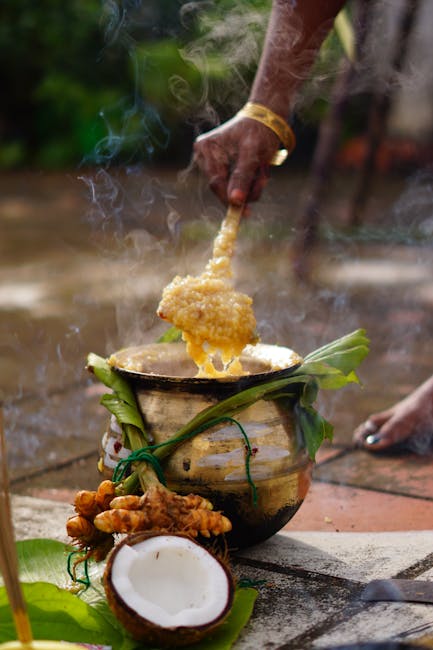
Pongal

An authentic vegetarian recipe from Tamil Nadu, India

Pongal

Cook Time

30 mins

Servings

4 servings

Difficulty

Easy
🥗

Category

Vegetarian
#traditional#authentic#tamil-nadu
🛒

Ingredients

For 4 servings

200g Raw rice (sona masuri)

80g Yellow moong dal (split)

60g Ghee

8g Whole black peppercorns

6g Cumin seeds

15g Ginger, finely chopped

3piece Green chillies, slit

15piece Curry leaves

30g Cashew nuts

1g Asafoetida (hing)

7g Salt

900ml Water

12 ingredients needed

💡 Pro Tip: Gather all ingredients before you start cooking for a smooth preparation process.

👨‍🍳

Cooking Instructions

Follow these step-by-step instructions to prepare this authentic dish

1

Dry roast the yellow moong dal in a pan over medium heat for 3–4 minutes, stirring continuously, until it turns light golden and smells nutty. This roasting step enhances the flavour of the dal.

Click to mark as complete

2

Wash the rice and roasted moong dal together under cold water until the water runs clear. Drain.

Click to mark as complete

3

In a pressure cooker, combine the washed rice and dal with 900 ml water and a pinch of salt. Pressure cook for 4–5 whistles until the rice and dal are completely soft and mushy — pongal should have a porridge-like consistency.

Click to mark as complete

4

Once the pressure releases, open the cooker and mash the rice-dal mixture with a ladle until it reaches a smooth, thick, flowing consistency. Add a little hot water if it is too thick.

Click to mark as complete

5

Heat ghee in a small pan over medium heat. Add the cashew nuts and fry for 2–3 minutes until golden. Remove and set aside.

Click to mark as complete

6

In the same ghee, add the whole black peppercorns and cumin seeds. Let them crackle for 30 seconds.

Click to mark as complete

7

Add the asafoetida, curry leaves, slit green chillies, and finely chopped ginger. Fry for 1–2 minutes until the curry leaves are crisp and the ginger is golden.

Click to mark as complete

8

Pour this entire tempering (tadka) over the cooked rice-dal mixture. Add the fried cashews. Stir well to combine.

Click to mark as complete

9

Season with salt and mix thoroughly. The pongal should be thick, creamy, and well-seasoned. Add more ghee if desired — pongal is traditionally quite rich with ghee.

Click to mark as complete

10

Serve hot with coconut chutney, sambar, and a side of vada. Pongal is the quintessential Tamil Nadu breakfast and festival dish.

Click to mark as complete

👨‍🍳

Chef's Tips

The rice and dal should be cooked until completely mushy — pongal is not meant to have separate grains; the porridge-like consistency is what defines it.

Generous ghee is non-negotiable for authentic pongal; the dish should be rich and glossy. Street-style and temple pongal uses far more ghee than home recipes typically suggest.

Whole black peppercorns are essential and should be bitten into during eating — they provide bursts of heat that are characteristic of pongal.

Ven pongal (savoury) is the most common version; for sweet pongal (sakkarai pongal), replace the savoury tempering with jaggery, cardamom, and more ghee.

📖

About This Dish

Pongal is a traditional vegetarian dish from Tamil Nadu, India. This authentic recipe provides exact measurements for cooking 4 servings.

- The rice and dal should be cooked until completely mushy — pongal is not meant to have separate grains; the porridge-like consistency is what defines it. - Generous ghee is non-negotiable for authentic pongal; the dish should be rich and glossy. Street-style and temple pongal uses far more ghee than home recipes typically suggest. - Whole black peppercorns are essential and should be bitten into during eating — they provide bursts of heat that are characteristic of pongal. - Ven pongal (savoury) is the most common version; for sweet pongal (sakkarai pongal), replace the savoury tempering with jaggery, cardamom, and more ghee.

🥗

Category

Vegetarian

⏱️

Cook Time

30 mins

👥

Servings

4 servings

📊

Difficulty

Easy